






Indian cuisine is known for its remarkable diversity, colourful ingredients, aromatic spices, and traditional cooking methods. From freshly prepared roti and dal-rice to regional delicacies, every meal reflects a combination of flavour and culinary heritage. Among the many foods that have remained part of Indian households for generations, pickles, popularly known as achar, hold a special place.
Whether it is tangy mango pickle, spicy lemon achar, green chilli pickle, or a traditional Gujarati preparation, Indian pickles are often served as a small but flavourful accompaniment to everyday meals.
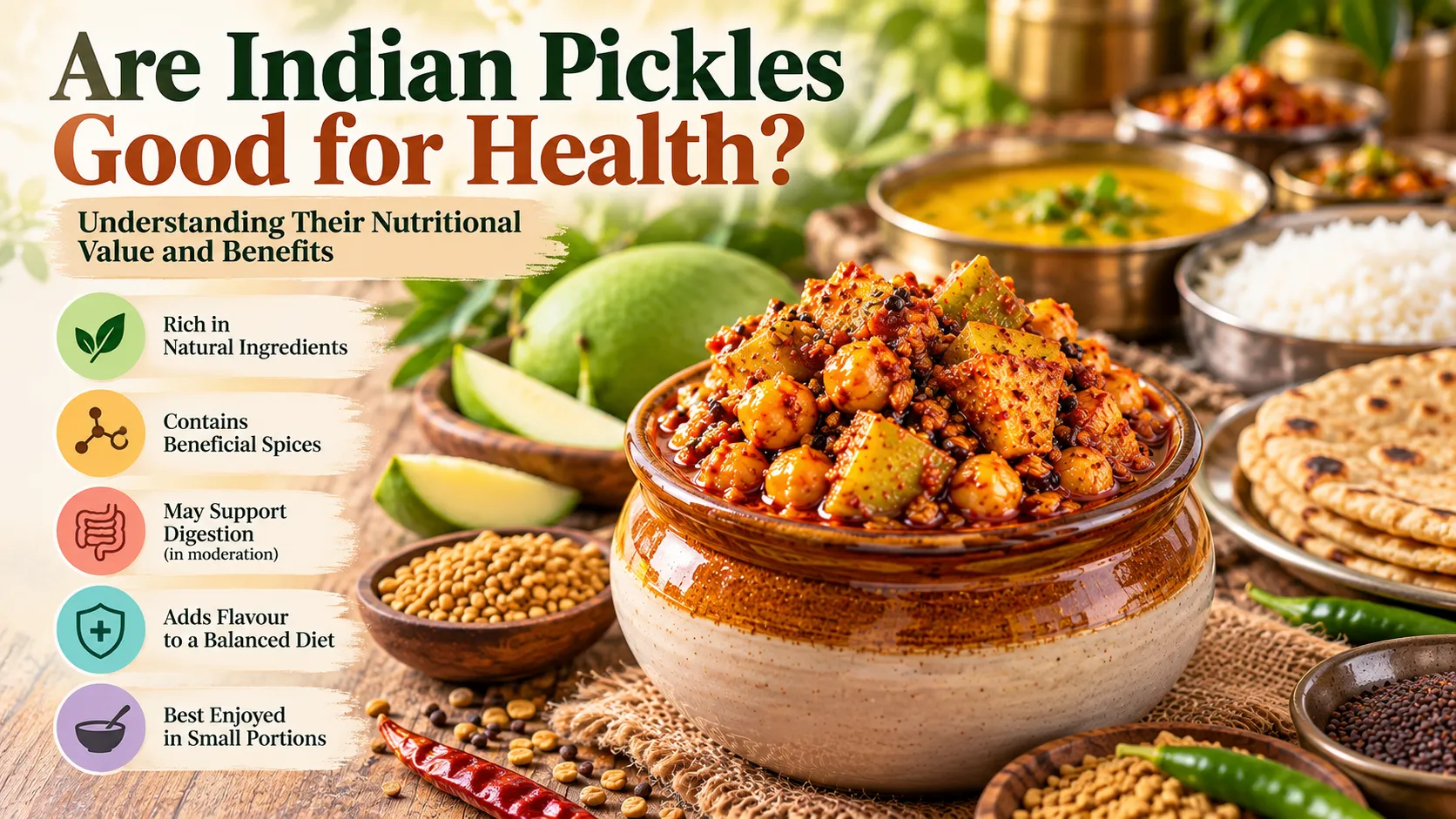
However, an important question often comes up among people who are becoming more conscious of their eating habits: Are Indian pickles good for health?
The answer depends on several factors, including the ingredients, preparation method, nutritional composition, serving size, and overall dietary habits.
Traditional pickles may contain ingredients such as mango, lemon, chilli, mustard seeds, fenugreek, turmeric, and other spices. Some of these ingredients provide nutrients and naturally occurring plant compounds. At the same time, pickles can contain considerable amounts of salt and oil, making moderation important.
Understanding both sides helps consumers make informed decisions rather than viewing all pickles as either healthy or unhealthy.
In this guide, we explore the nutritional value of Indian pickles, their traditional ingredients, potential dietary benefits, important health considerations, and practical ways to enjoy achar as part of a balanced diet.
What Are Indian Pickles and How Are They Traditionally Prepared?
Indian pickles are preserved or seasoned food preparations made using fruits, vegetables, spices, salt, oil, and, in some varieties, acidic ingredients.
Their preparation differs across regions and households. A traditional mango pickle from Gujarat may have a different flavour and ingredient combination from a South Indian lemon pickle or a North Indian mixed vegetable achar.
Some preparations rely on oil, salt, and spices for preservation, while others use vinegar or fermentation techniques.
Traditional pickle-making is closely connected with seasonal food practices. Ingredients such as raw mangoes, lemons, chillies, and vegetables are prepared during their respective seasons and combined with spices to create distinctive accompaniments.
Over time, these preparations have become an important part of India’s culinary identity.
Although modern packaged pickles offer convenience, their ingredients and nutritional composition can differ considerably. Therefore, checking the product label is useful when choosing a pickle.
What Is the Nutritional Value of Indian Pickles?
The nutritional value of a pickle depends on its main ingredient and preparation method.
For example, lemon pickle, mango pickle, chilli pickle, and mixed vegetable pickle do not have identical nutritional profiles.
Many pickles are consumed in small quantities, so their contribution to the overall diet is generally limited. Nevertheless, understanding their ingredients provides a clearer picture of what they offer.
1. Vitamins and Plant-Based Nutrients
The fruits and vegetables used in pickles may contain vitamins and naturally occurring plant compounds.
Raw mango, for example, contains vitamin C before processing, although the amount retained in the finished pickle can vary depending on preparation and storage.
Lemons are also known for their vitamin C content, while chillies contain different plant compounds, including carotenoids and capsaicin.
However, it is important to remember that pickling and storage can affect nutrient levels. A pickle should not automatically be considered nutritionally equivalent to its fresh fruit or vegetable ingredient.
2. Spices and Naturally Occurring Compounds
Indian pickles frequently include spices such as turmeric, mustard, fenugreek, cumin, and chilli.
These ingredients contain naturally occurring compounds that have been studied for their properties in food and nutrition research.
For instance, turmeric contains curcumin, while fenugreek contains several plant compounds and dietary fibre.
However, the quantity of these compounds in a typical serving of pickle may be small. Eating pickle should not be treated as a replacement for a varied diet or medical treatment.
3. Dietary Fibre
Some pickles contain pieces of fruits, vegetables, or legumes that contribute dietary fibre.
The actual amount depends on the ingredients, processing, and serving size.
For people looking to improve their overall fibre intake, fresh vegetables, fruits, pulses, and whole grains remain important dietary choices.
4. Sodium and Oil Content
Two nutritional considerations deserve particular attention: sodium and oil.
Salt plays an important role in many traditional pickle preparations. It contributes to flavour and can help preserve the product.
Oil is also commonly used in certain varieties.
Consequently, some pickles can be relatively high in sodium, fat, or calories per serving.
People who need to monitor their sodium intake should pay attention to serving sizes and product labels.
Potential Benefits of Including Traditional Pickles in a Balanced Diet
When consumed in moderate quantities, Indian pickles can contribute flavour, variety, and enjoyment to meals.
Their potential dietary advantages are primarily connected with their ingredients and the way they complement other foods.
1. They Add Variety to Everyday Meals
One of the simplest advantages of pickle is its ability to make familiar meals more interesting.
A small serving of mango or lemon achar can complement dal-rice, roti, khichdi, or paratha.
This variety can make home-cooked meals more enjoyable without requiring elaborate additional preparation.
Food enjoyment is also an important part of maintaining sustainable eating habits.
2. They Introduce Different Spices into the Diet
Traditional Indian pickles often contain a combination of spices rather than relying on a single seasoning.
Mustard, fenugreek, turmeric, chilli, and cumin each contribute their own aroma and flavour.
Including different herbs and spices in cooking is one way to add variety to meals without depending entirely on additional sauces or flavour enhancers.
However, the presence of spices alone does not establish that a particular pickle provides a specific medical benefit.
3. Some Fermented Pickles May Contain Live Microorganisms
Fermentation is an important traditional food preparation method.
Certain naturally fermented vegetable pickles may contain live microorganisms produced during fermentation.
These are different from pickles preserved primarily through vinegar, oil, or other methods.
It is important to distinguish between fermented foods and all pickles in general. Not every Indian achar is fermented, and commercially processed products may not contain live cultures.
If someone is specifically interested in fermented foods, the preparation method and product information should be checked rather than assuming that every pickle is probiotic.
4. They Can Complement Nutrient-Rich Home-Cooked Meals
A pickle is generally consumed as an accompaniment rather than a complete meal.
When served alongside vegetables, pulses, whole grains, and other nutritious foods, it can contribute flavour to an otherwise simple plate.
For example, a traditional Indian lunch consisting of dal, rice, vegetables, and a small serving of achar provides a wider combination of food groups than pickle alone.
The overall nutritional quality of the meal matters much more than the presence of one condiment.
5. They Help Preserve Traditional Food Culture
Food is not only about nutrients. It is also connected with heritage, family traditions, and regional identity.
Indian pickle-making reflects generations of knowledge about seasonal ingredients, spices, preservation, and flavour combinations.
From homemade mango achar to regional preparations such as chana methi pickle, these foods help maintain culinary traditions.
Enjoying traditional food in appropriate portions can be part of a balanced and culturally meaningful eating pattern.
Are All Indian Pickles Equally Healthy?
No. Different pickle varieties have different ingredients, preparation techniques, and nutritional profiles.
The term healthy pickle should therefore be considered in context rather than applied universally.
Mango Pickle
Mango pickle is one of the most familiar Indian achar varieties.
It is generally prepared using raw mango, salt, spices, and oil, although recipes vary.
Raw mango contains naturally occurring nutrients, but the finished pickle’s nutritional composition depends on processing and serving size.
Its sodium and oil content are particularly relevant considerations.
Lemon Pickle
Lemon pickle offers a distinctive citrus-based flavour.
Lemons contain vitamin C, but the nutrient content of the finished pickle depends on preparation and storage.
As with other varieties, salt content should be considered, especially for people following sodium-restricted diets.
Green Chilli Pickle
Green chilli pickle is appreciated for its sharp and spicy character.
Chillies contain capsaicin and other naturally occurring compounds.
However, spicy pickles may not be suitable for everyone, particularly individuals who find spicy or acidic foods aggravate their digestive symptoms.
Mixed Vegetable Pickle
Mixed vegetable pickle combines different vegetables and spices.
Its ingredient diversity can contribute different plant-based nutrients, although processing and serving size influence the final nutritional value.
Consumers should check the ingredient list to understand what vegetables and other components are included.
Chana Methi Pickle
Chana methi pickle is a traditional variety associated with Gujarati food culture.
It commonly combines chana, fenugreek, spices, and, in some preparations, raw mango.
Chana contributes texture, while methi gives the pickle its characteristic earthy flavour.
This variety offers a distinctive alternative to conventional mango or lemon achar. However, its health suitability still depends on the recipe, sodium content, oil content, and serving size.
How Much Pickle Should You Eat?
Portion size is one of the most practical factors when including pickle in an everyday diet.
Because many traditional pickles contain concentrated seasoning, salt, and oil, they are generally best enjoyed as small accompaniments rather than consumed in large quantities.
A small serving, such as approximately one teaspoon, can be a reasonable starting point for someone who enjoys pickle with a meal. The appropriate amount can vary according to the product’s nutritional composition and an individual’s dietary needs.
People who have been advised to restrict sodium should follow their healthcare professional’s recommendations.
It is also useful to remember that a pickle serving should complement a meal rather than replace vegetables, fruits, pulses, or other important food groups.
Important Health Considerations Before Eating Indian Pickles
Although pickles can be enjoyed as part of a varied diet, there are several factors consumers should understand.
1. High Sodium Intake
Salt is a common ingredient in traditional pickle preparation.
Regularly consuming excessive sodium can contribute to high blood pressure and increase cardiovascular risk.
People with hypertension, kidney disease, or other conditions requiring sodium restriction should be particularly careful.
Checking sodium information on packaged products and controlling serving size can help.
2. Oil and Calorie Content
Oil-based pickles may contain considerable fat and calories relative to their serving size.
This does not automatically make them unsuitable for everyone, but it is useful to account for them within overall dietary intake.
The type and quantity of oil used can differ between products.
3. Digestive Sensitivity
Spicy, oily, or acidic foods can trigger discomfort in some individuals.
People who experience acidity, heartburn, or other digestive symptoms after eating pickle may need to reduce their intake or avoid varieties that trigger their symptoms.
Individual tolerance differs, so there is no single recommendation that applies to everyone.
4. Food Safety and Storage
Proper preparation and storage are essential for food safety.
Consumers should check packaging integrity, expiry or best-before dates, and the manufacturer’s storage instructions.
Use a clean, dry spoon and close the container properly after serving.
Do not consume a product if its appearance, smell, packaging, or condition raises concerns about spoilage.
How to Choose a Better Pickle for Everyday Consumption
Choosing a pickle involves looking beyond its taste or traditional reputation.
A few practical steps can help consumers make informed decisions.
Read the ingredient list: Understand the main ingredients, type of oil, salt, and any other components.
Check sodium information: If nutritional values are provided, compare sodium levels per serving rather than relying only on the product name.
Consider portion size: A small serving may fit more easily into an everyday meal than frequent large portions.
Look for clear product information: Packaging should provide relevant details such as net quantity, ingredients, manufacturing information, and storage instructions.
Choose according to personal dietary needs: Someone monitoring sodium, fat, or digestive triggers may need a different option from someone without those restrictions.
The most appropriate pickle is not necessarily the one marketed as the healthiest. It is one whose ingredients, nutritional profile, and serving size suit the individual’s overall dietary pattern.
How to Include Indian Pickles in a Balanced Diet
Indian pickles can be enjoyed in different ways without making them the central component of a meal.
Here are some simple serving ideas.
With Dal and Rice
Dal-rice provides a familiar combination of lentils and grains.
A small serving of pickle can add a contrasting flavour to the meal.
With Roti and Vegetables
A balanced Indian lunch containing roti, cooked vegetables, and dal can be complemented with a little achar.
The main focus should remain on the vegetables, pulses, and grains.
With Thepla or Paratha
Traditional Gujarati thepla and paratha are commonly enjoyed with pickle.
This combination offers a familiar regional flavour experience, particularly when served in appropriate portions.
With Khichdi
Khichdi is a simple meal that can be accompanied by a small serving of mango, lemon, or chana methi pickle.
The mild flavour of khichdi contrasts with the seasoning of achar.
With a Traditional Gujarati Thali
A Gujarati thali may include rotli, shaak, dal, rice, kadhi, and other accompaniments.
Pickle adds another flavour element to the spread while remaining a small part of the overall meal.
Discover Traditional Indian Pickle Flavours with Mumlicious
For people who appreciate regional Indian cuisine, exploring traditional pickle varieties can be an enjoyable way to discover familiar ingredients and distinctive flavours.
Mumlicious offers an online destination for exploring traditional food products, including Chana Methi Pickle.
This variety is associated with Gujarati-inspired culinary traditions and combines the distinctive taste of chana, methi, and spices.
Whether served with thepla, paratha, khichdi, or a simple home-cooked meal, chana methi achar offers a different flavour experience from conventional mango or lemon pickle.
You can explore the product here:
Chana Methi Pickle by Mumlicious
https://www.mumlicious.com/product/chana-methi-pickle/
To explore the wider product range, visit the official Mumlicious website:
For product-specific ingredients, nutritional information, and storage requirements, refer to the details provided on the product packaging and listing.
Frequently Asked Questions About Indian Pickles and Health
Are Indian pickles good for health?
Indian pickles can be included in a balanced diet in moderate quantities. Some varieties contain fruits, vegetables, and spices that contribute nutrients and plant compounds. However, many pickles are also high in sodium or oil, so their nutritional suitability depends on ingredients and serving size.
Which Indian pickle is good for everyday consumption?
There is no universally healthiest pickle for everyone. Mango, lemon, chilli, mixed vegetable, and chana methi pickles have different nutritional profiles. Choosing one with suitable ingredients and an appropriate sodium level is more useful than relying on a general health ranking.
Do Indian pickles contain vitamins?
Some pickles contain ingredients that naturally provide vitamins. However, processing and storage can affect nutrient retention. The actual nutritional value depends on the ingredients and preparation method.
Are fermented pickles better than regular pickles?
Naturally fermented pickles may contain live microorganisms, depending on how they are prepared and stored. Oil-based or vinegar-based pickles are not necessarily fermented. Their nutritional characteristics should be evaluated separately.
Can people with high blood pressure eat pickle?
People with high blood pressure may need to limit sodium intake. Since many pickles contain substantial salt, they should check nutritional information and follow their healthcare professional’s dietary recommendations.
Is chana methi pickle a healthy option?
Chana methi pickle contains traditional ingredients such as chana, fenugreek, and spices. Its suitability depends on the overall recipe, salt and oil content, portion size, and individual dietary requirements. It should be enjoyed as an accompaniment rather than considered a health supplement.
Should pickle be eaten every day?
Whether daily consumption is appropriate depends on the product’s nutritional composition and the person’s overall diet. For people who enjoy pickle regularly, small portions and attention to sodium intake are sensible considerations.
Final Thoughts
Indian pickles are an important part of the country’s culinary heritage. Their distinctive flavours, regional ingredients, and traditional preparation methods have helped them remain popular across generations.
From mango and lemon achar to mixed vegetable and chana methi pickle, each variety offers a different combination of taste and texture.
When it comes to health, the most useful approach is to understand what goes into a pickle rather than assuming that every traditional food is automatically beneficial or harmful.
Some pickles provide ingredients containing vitamins and naturally occurring plant compounds, while their salt and oil content may require moderation.
Enjoying a small portion alongside a meal rich in vegetables, pulses, fruits, and whole grains can help maintain a balanced approach to food.
Ultimately, traditional achar is best appreciated for what it is: a flavourful accompaniment that connects everyday eating with India’s rich culinary traditions.